
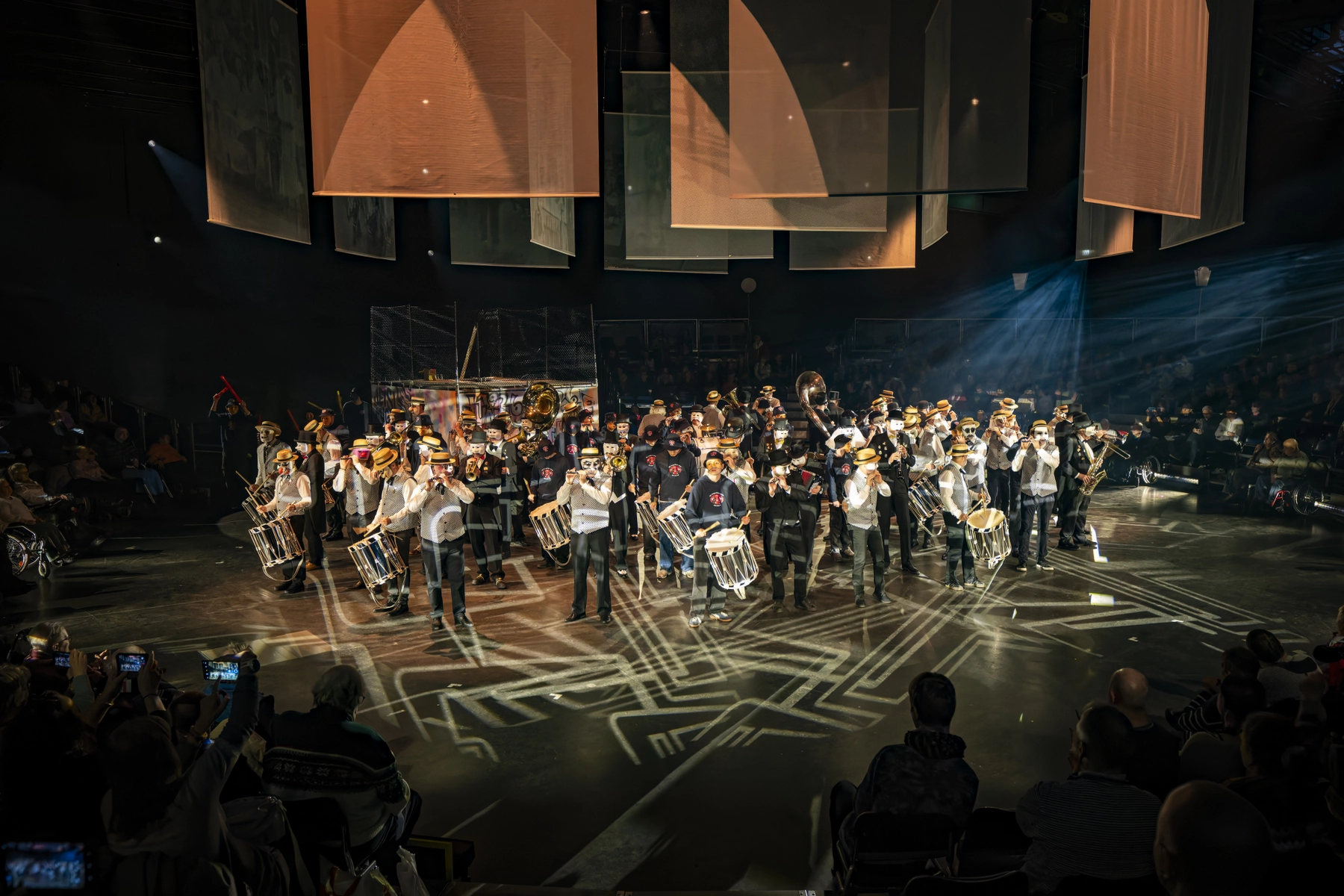
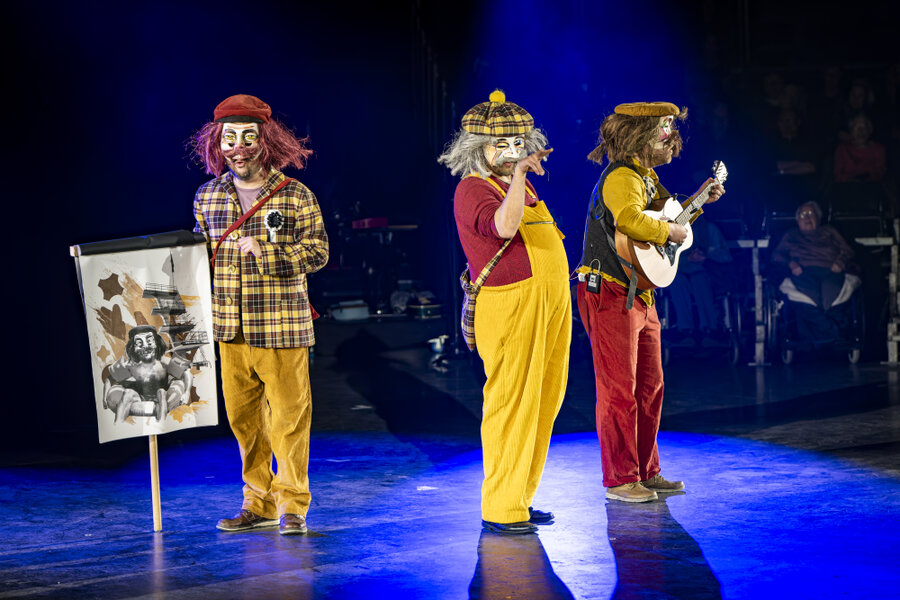
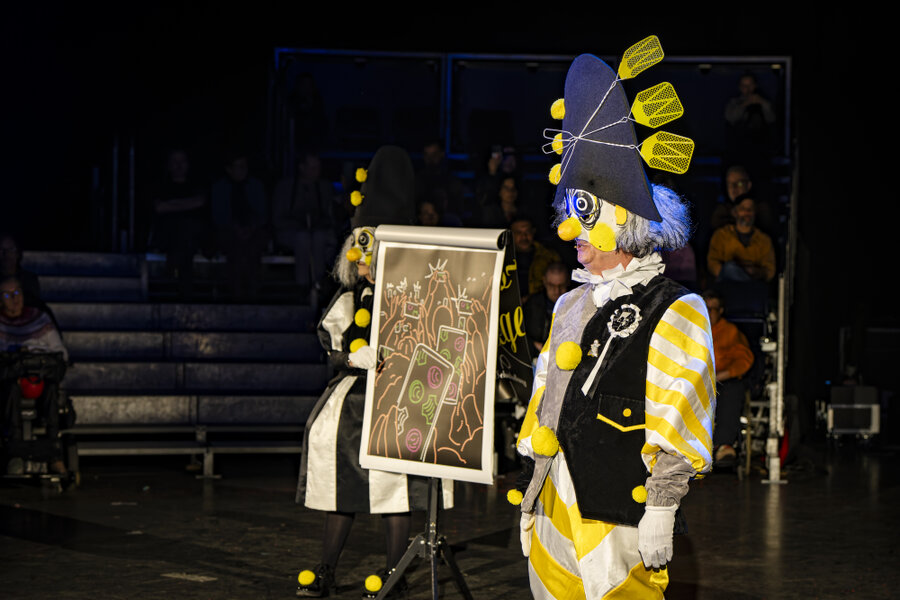
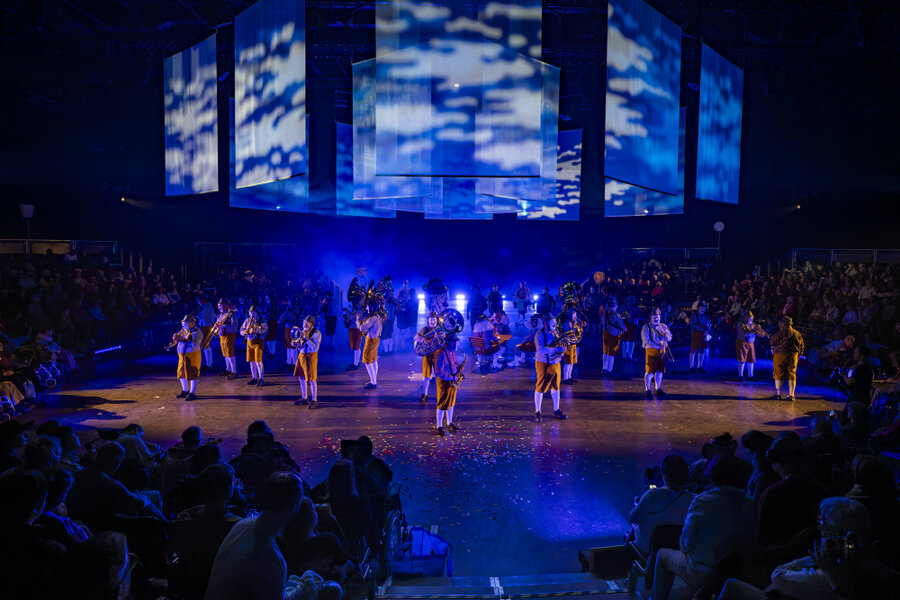
The Drummeli is one of the most important pre-carnival events: over 1,000 participants from the traditional piccolo and drum bands present classic carnival marches, avant-garde new compositions and quirky humor. Piccolo and drum groups, Guggenmusik bands, Schnitzelbänke (satirical carnival songs) and the legendary Rahmestiggli (acting scenes) provide a colorful carnival potpourri.
Drummeli 2026
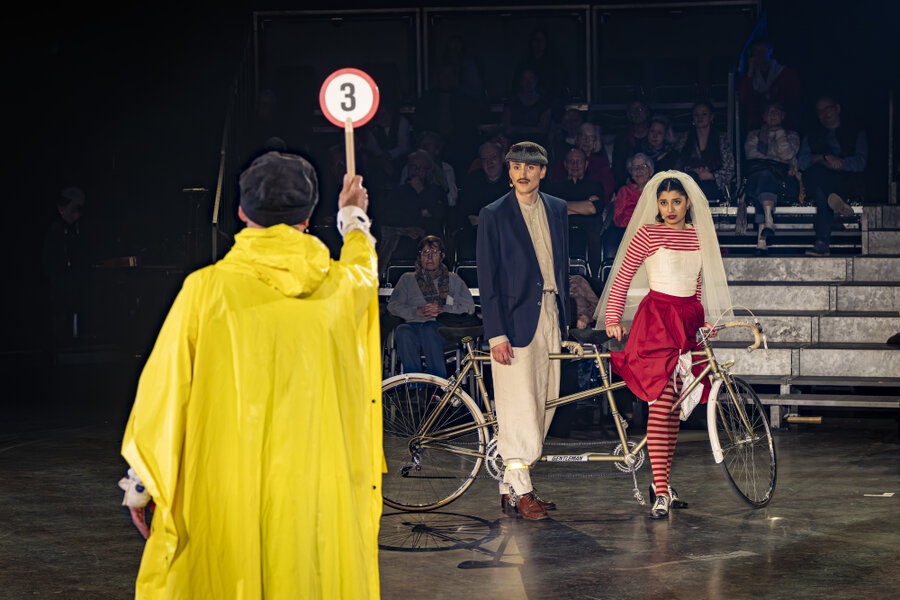
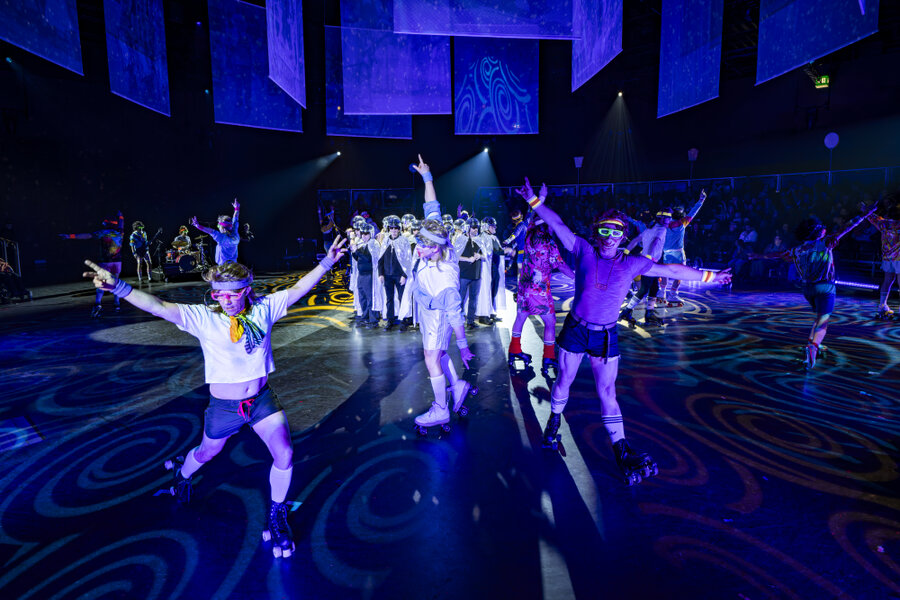
Pfyffedeggel! Visitors to Drummeli in the Event Hall at Messe Basel from February 7 to 14, 2026, experienced pure pre-Carnival fun.
History
The Drummeli is the big showcase for the traditional piccolo and drum bands, which takes place 14 days before carnival. But how did it come about in the first place? We take a chronological look back, but this is by no means exhaustive.
February 26, 1906: The Fasnacht Committee, at that time still consisting of representatives of the Quodlibet and the Wurzengraber-Kämmerli, invited guests to a Monstre drum concert in the Burgvogtei Hall (today's Volkshaus). At that time, only drum or brass band performances were heard, hardly any piccolos and no "Raamestiggli" (acting scenes).
"The hall was packed long before 8 o'clock, as could be predicted, and a stream of people of frightening force was still trying to gain entry. People bravely waited in the aisles and even in the wet garden. Never before had there been so many young people present as on this occasion, but all the old drumming and carnival luminaries of Basel were also there". The National-Zeitung on the first Drummeli 1906
From 1907 to 1910, concerts are held in the Burgvogtei on the Monday before Ash Wednesday. The orphan boys also appear in the program during this time.
In 1910, income of CHF 1,406.20 was registered, of which the Fasnacht Committee paid out CHF 764.40 to the performers.
In 1911, the Monstre moves to the music hall of the Stadtcasino. The patronage now lay with the newly founded Fasnacht Committee.
From 1914, the Küchlin Theater (then still a variety theater) serves as the performance venue. A prologue is mentioned for the first time. The hall rental cost CHF 600. The march repertoire was quite modest with 12 marches and was not sufficient for the 18 performing piccolo and drum bands. The Fasnacht Committee regularly apologizes for the repetitions.
In the war years of 1915 and 1916, ideas are very strongly influenced by patriotism.
Two performances take place from 1918.
Between 1920 and 1922, "Raamestiggli" (acting scenes) are mentioned for the first time. It was also decided not to have all the drummers and piccolo players perform together again at the end of the performance; there were simply too many of them.
Three performances are offered in 1926. All were sold out.
From 1940 to 1945, there is no carnival in the streets due to the Second World War. This made the drum concerts all the more important for both the active carnival participants and the public. The proceeds were used to send parcels to carnival participants on active service. At that time, the names "Dipflischysser und Haimlifaiss" appear in the Raamespiil (acting ensemble); a two-person performance that was regularly on the program until the end of the 1950s and celebrated great success. It can also still be heard on one of the first Drummeli sound recordings.
In 1947, a delegates' meeting of the cliques decides that the spoken word should be reserved for the "Raamespiiler" (actors).
From 1948, tickets for the eight performances are sold at ten counters at the Mustermesse. The eager buyers queue for hours, sometimes staying overnight and taking over from each other while waiting. Nobody pushes their way in, people play cards, cook and joke. A special event - even the newsreel devotes a report to the occasion. All the performances are sold out. They take place over two weekends in the afternoons and evenings.
Another performance is added in 1956. The balcony scene with the married couple Mr. and Mrs. Dr. "Gläppersämi", em "Frailain Glepfgatter" and "dr Frau "Hibsch" begins to cause a sensation. The Varieté Küchlin is packed right up to the top tiers, and the two side balconies on the second floor are used for the balcony scene.
From 1962 onwards, not all the traditional piccolo and drum bands can perform in the same year; some have to take a break. For some years now, the number of traditional piccolo and drum bands has remained constant so that they can all perform on Drummeli every two years.
From 1971, tickets are raffled off for the first time and can be ordered for a maximum of four seats. The notarized draw is maintained until 2003. In the meantime, there are various competing events, so the raffle is no longer appropriate. A switch is made to normal sales with pre-ordering rights for carnival participants.
Between 1993 and 2010, the Drummeli takes place in the Festsaal at Messe Basel. In the beginning, the huge stage is a challenge for many piccolo and drum groups, but soon the concepts are adapted and there are brilliant performances and great stage sets. People can eat and drink during the performance, which is sometimes considered a nuisance. In the legendary foyer, the party goes on until the early hours every night.
From 2011, the Musical Theater on Feldbergstrasse is the venue for the Drummeli, a well-suited location with comfortable seats, a good view and good acoustics for the audience. The new venue in turn creates a new situation for the performers, who nevertheless also perform skillfully on this stage.
The Drummeli has to take a break in 2021 due to the global coronavirus pandemic.
In 2022, the Drummeli returns to the Küchlin Theater - also due to restrictions caused by the coronavirus pandemic.
Since 2023, the Drummeli has been held in the Event Hall at Messe Basel, now in its sixth venue.
From 2025 , the performing piccolo and drum groups will alternate every three years to make the event more compact. In addition, the Drummeli 2025 takes place in a round arena for the first time.
We send you all the news about the Basel Carnival directly to your inbox.