
History
The history of the Basel Carnival is lost in the darkness of time. The devastating earthquake of 1356, which largely destroyed our city and its documents, contributed to this. Nevertheless, some things are known about its past. And we would like to bring this back to light here.

Like most carnival customs, the Basel Carnival is of Celtic and Germanic origin and refers to the driving out of winter. But the most beautiful three days of the year were also shaped by the guilds, the knights' tournaments that were common in the past and the festivals before Lent.
The oldest historical reference is the "evil carnival" of 1376. On the day before Ash Wednesday, the Duke of Austria held a tournament on Münsterplatz, where the citizens allowed themselves to be provoked by the knights. They took up arms and drove away the noblemen, four of whom were killed in the tumult. As a result, twelve citizens were beheaded. Emperor Charles IV imposed the imperial ban (outlawry) on the town and withdrew its protection from the Roman-German Empire.
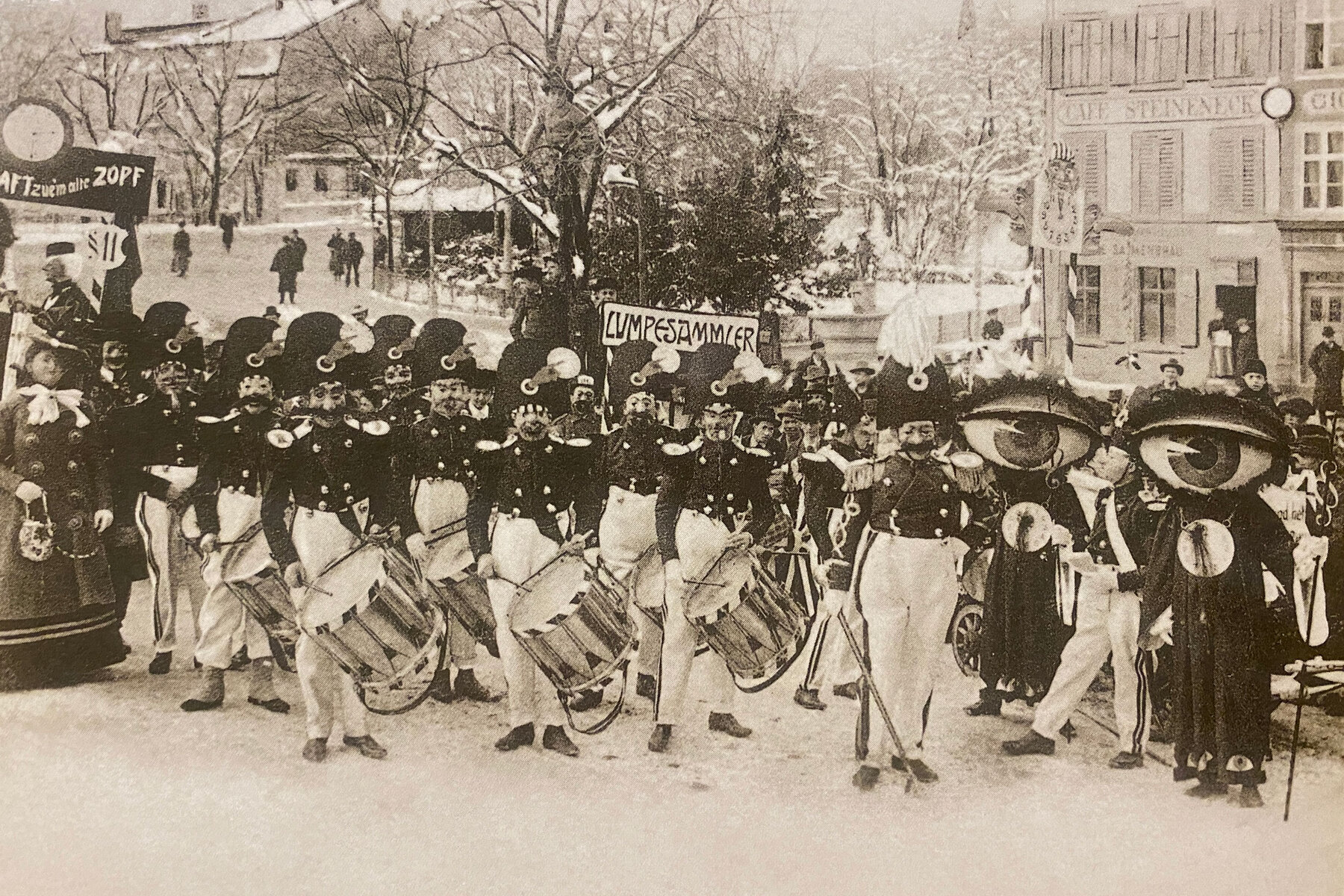
After that, there is further evidence of their existence. However, the Reformation considerably restricted the exuberant activities between Christmas and Lent, which had previously been tolerated by the Catholic Church. Nevertheless, there were still carnival parades in connection with military mustering, in which the guilds played a central role until the 19th century. At this time, the Basel Carnival gradually developed into what it is today. Torches gave way to lanterns for safety reasons, but Schnitzelbänke (satirical carnival songs), drums and piccolos became permanent fixtures.
UNESCO World Heritage Site
In 2017, the Basel Carnival was added to UNESCO's list of intangible cultural heritage. In doing so, it recognized the history, tradition and uniqueness of the Basel Carnival. The connection between music, craftsmanship and oral and written forms of expression was particularly emphasized.
An application video was produced in 2016 so that those responsible at UNESCO could see for themselves the colorfulness, wit and creativity of Basel Carnival. This film is still valid and impressively illustrates that the inclusion was absolutely justified at the time.
Added value
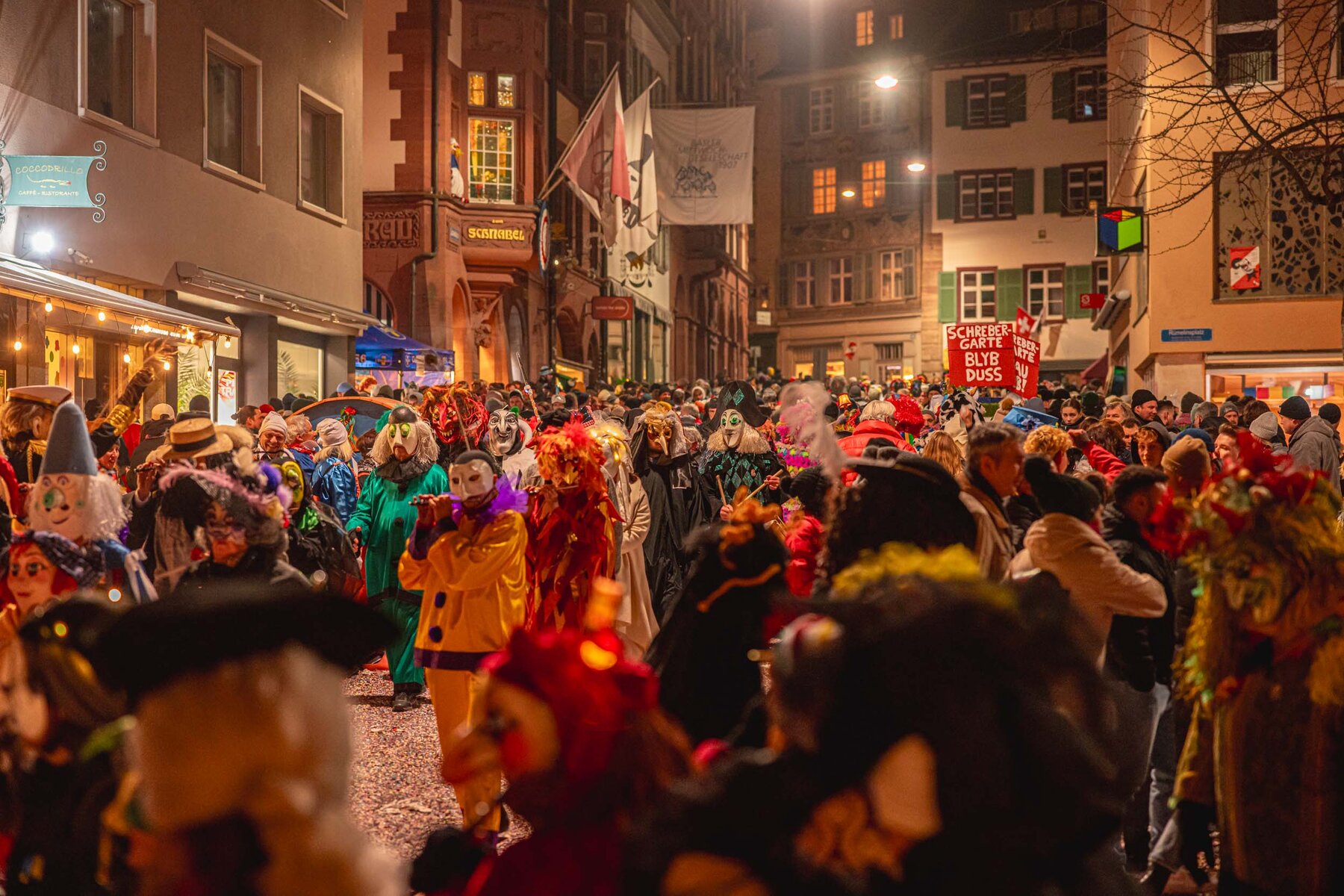
The significance of the carnival is a much-discussed topic in the city on the Rhine. We see the carnival as a reflection of our identity, as a cultural and social event and as one of Basel's trademarks.
However, the fact that it is also an economic factor is often forgotten. For this reason, the Fasnacht Committee asked the University of Applied Sciences Northwestern Switzerland (FHNW) to conduct a study on the economic significance of the Basel Carnival in 2005 - with exciting results.
Glossary
The Basel Carnival is also characterized by peculiar terms. We have compiled a few of them for you here, without any claim to completeness.
We send you all the news about the Basel Carnival directly to your inbox.