
The Basel Carnival is present on our streets and alleyways almost all year round. The sound of piccolos can be heard from a window, a clique cellar can be found at the next staircase, somewhere a badge seller is advertising the Blaggedde. And once the most beautiful three days of the year are over, the carnival fever starts up again after a short break, because the preparations and anticipation are celebrated here all year round.

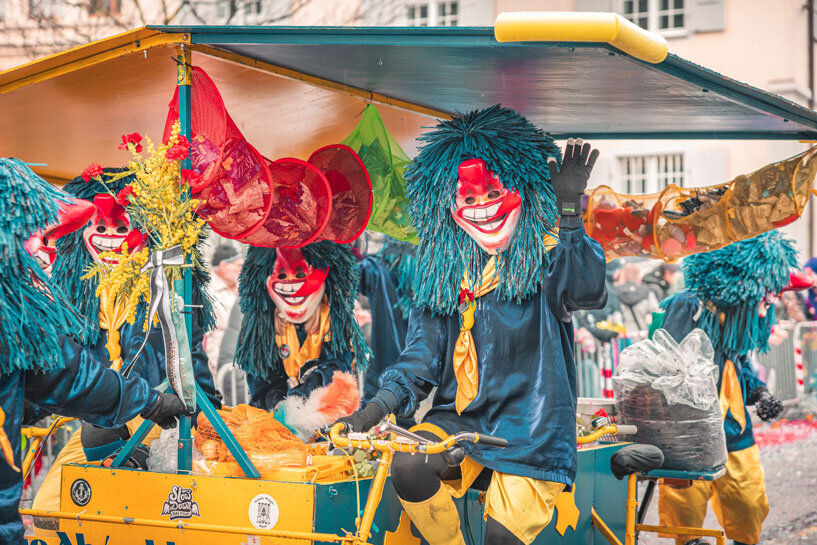
People in Basel are in carnival fever 365 days a year. Find out what happens before, during and after the most beautiful three days of the year.
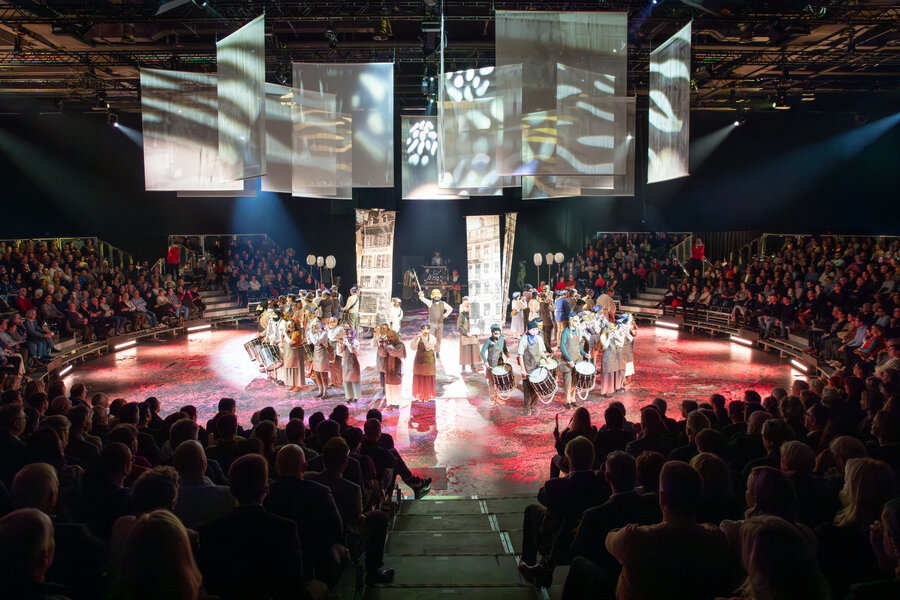
Would you like to get in the mood for carnival? Then we advise you to visit the Drummeli.
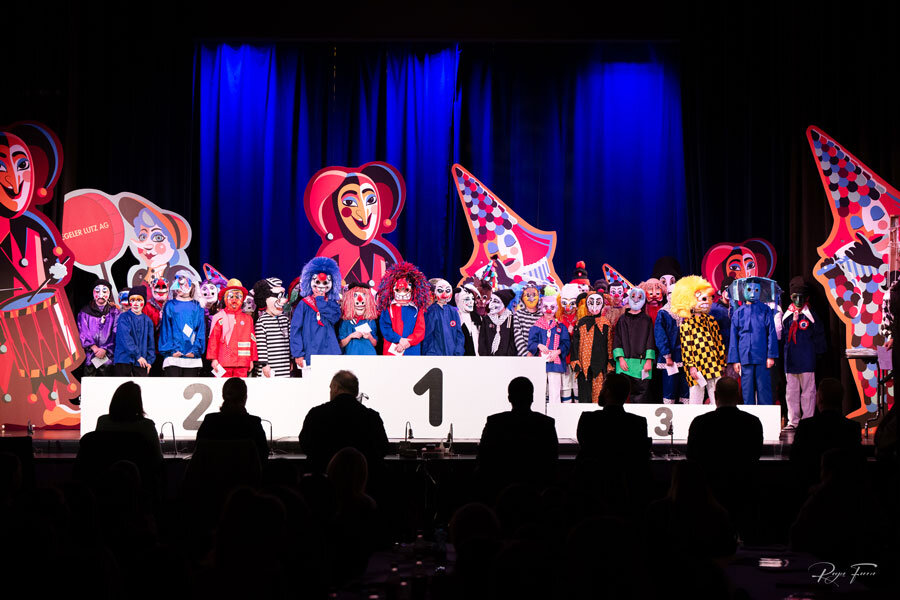
The pre-carnival events also include the"Bryysdrummle und -pfyffe" (a competition for drumming and piccolo playing)which is carried out by four traditional piccolo and drum bands on a rotational basis. It is held under the patronage of the Fasnacht Committee.

If you stroll through the recreational areas in Basel and the surrounding area in the weeks leading up to the carnival, you may come across piccolo and drum bands or Guggenmusik bands. They practice outside to make sure that the music and marching really works during carnival. In principle, marching exercises can be held 365 days a year in the canton of Basel-Stadt; the ban on drumming was abolished in 2011. Night-time rest must be observed.
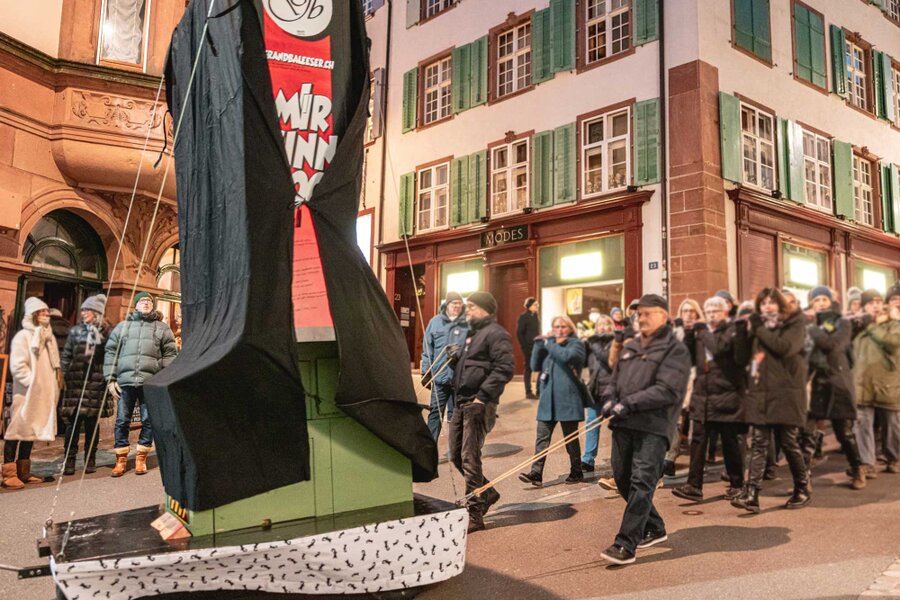
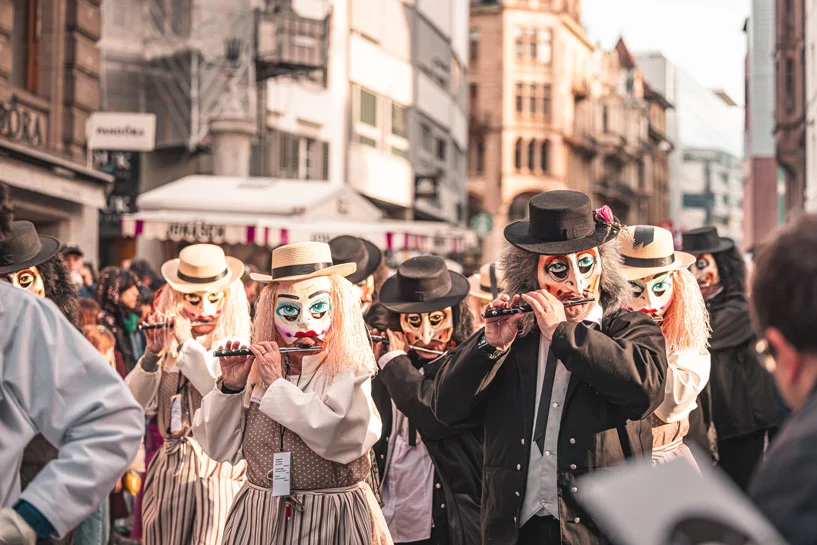
As dusk falls on the Sunday evening before the carnival, the piccolo and drum bands carry their fabric-covered lanterns into the city center, accompanied by the sound of piccolos. This is how the more than 200 lanterns arrive at their respective locations, from where the individual groups march off at 4 am the next morning for the Morgestraich.
Piccolo and drum bands, Guggenmusik bands and carnival floats parade through the old town making music and scheming: all this and much more awaits you on the three best days of the year!

The Morgestraich, with which the Basel Carnival begins on Monday, is a magical moment and, for many, the highlight of the carnival. At 4 am sharp, the lights go out in the city center. While the piccolo and drum bands all start the same march, their colorful head lanterns and around 200 artistically designed procession lanterns serve as a source of light.
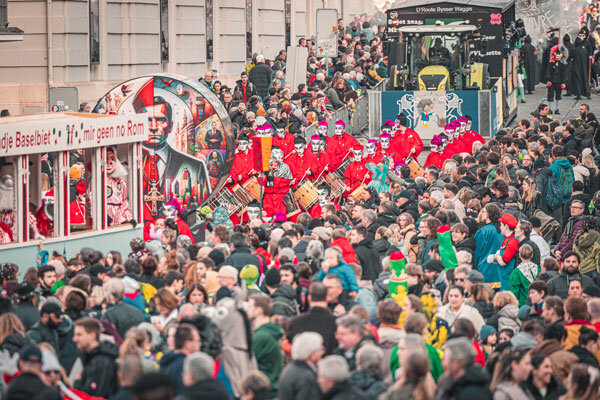
The parade, called Cortège in Basel, takes place on Monday and Wednesday afternoons between 1.30 and 6 pm. Around 11,000 carnival participants present their themes, which are redesigned from scratch every year. The Waggis (traditional carnival characters) on the carnival floats throw confetti, oranges and much more, the Guggenmusik bands play their tunes and the piccolo and drum bands, the junior and senior sections and all the other formations march in between and let their piccolo and drum sounds resound. A perfect mixture of anarchy and organization: the carnival participants are only given a few fixed points, the rest they organize themselves. We admit it, we too are surprised every year that it works so well!
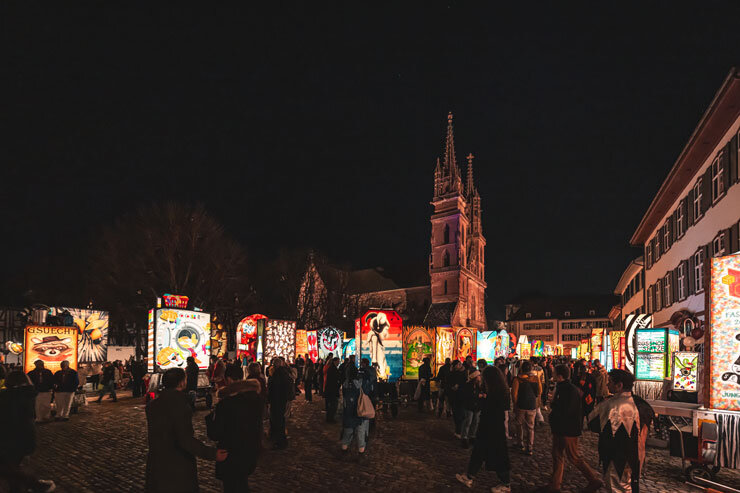
We call it the most beautiful open-air museum in the world: the lantern exhibition on Münsterplatz. On display are over 200 works of art in which the lantern artists satirize, caricature and add verses that match the themes. They are freely accessible from Monday evening until Wednesday morning. The badge is valid as an admission ticket, so wearing it is a matter of honor. During the same period, the carnival floats and props of around 50 carnival groups can be admired on the Kasernenareal.
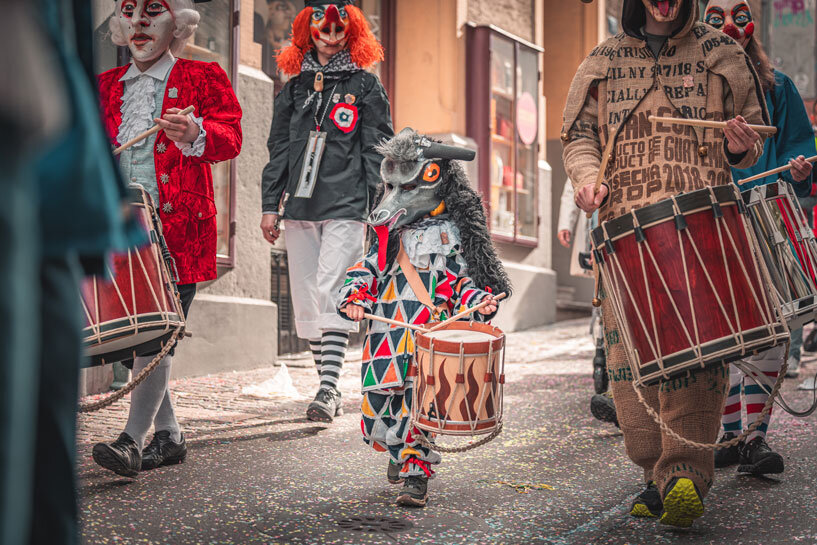
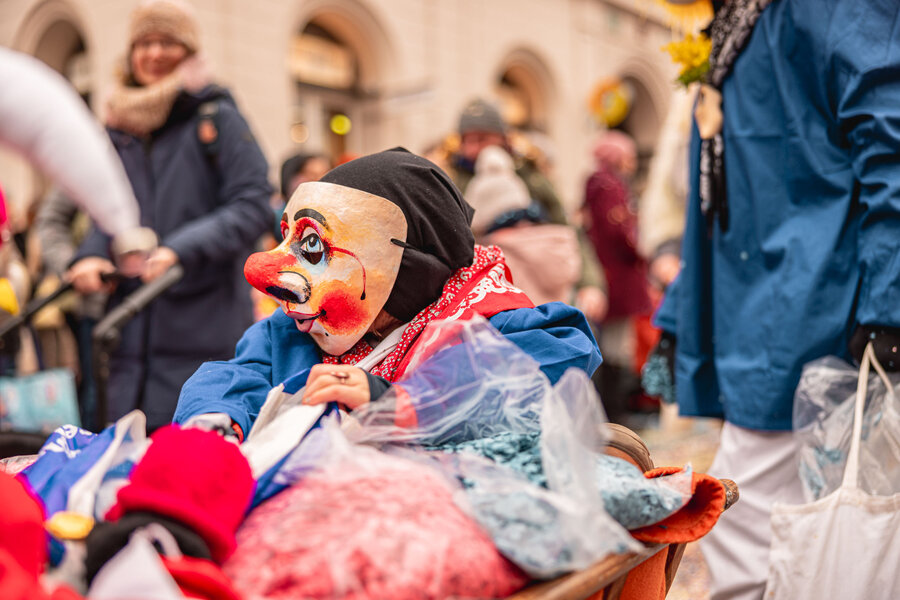
On Tuesday afternoons, the inner city belongs to the little ones; the Binggis, as we say in Basel. During the children's carnival, they practise the traditions, accompanied by parents, grandparents or other adults. At the same time, a lot of new things happen on the second day of carnival: unlike on Monday and Wednesday, the carnival participants don't usually walk in their usual formation, but form new groups and wear individual costumes.
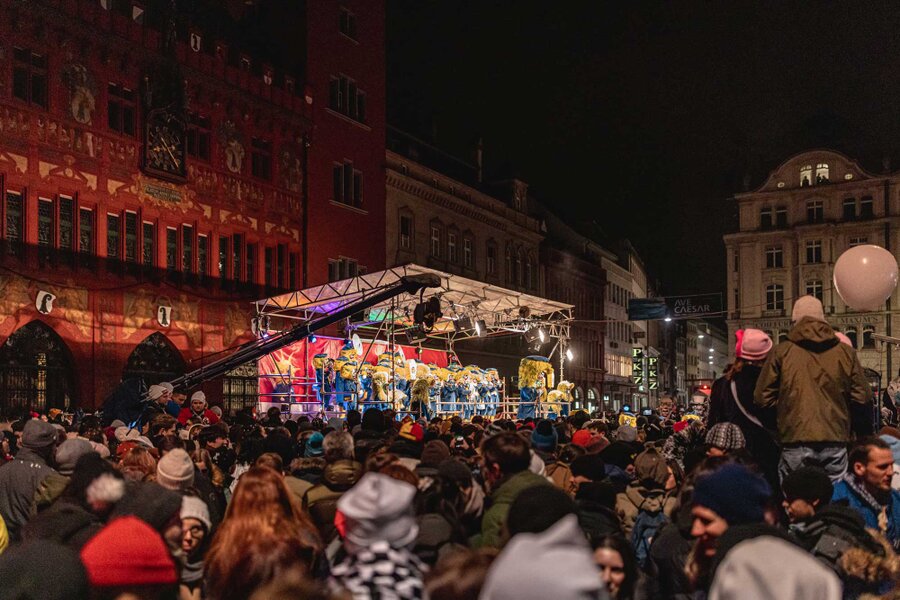
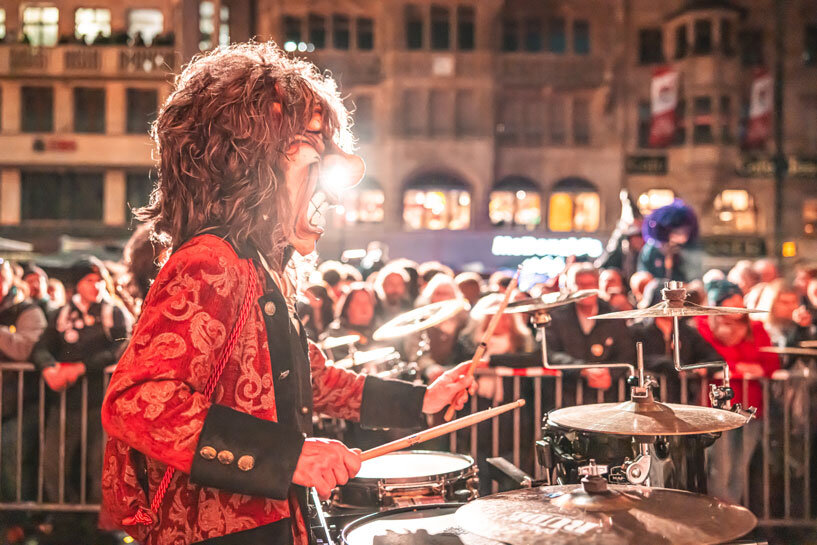
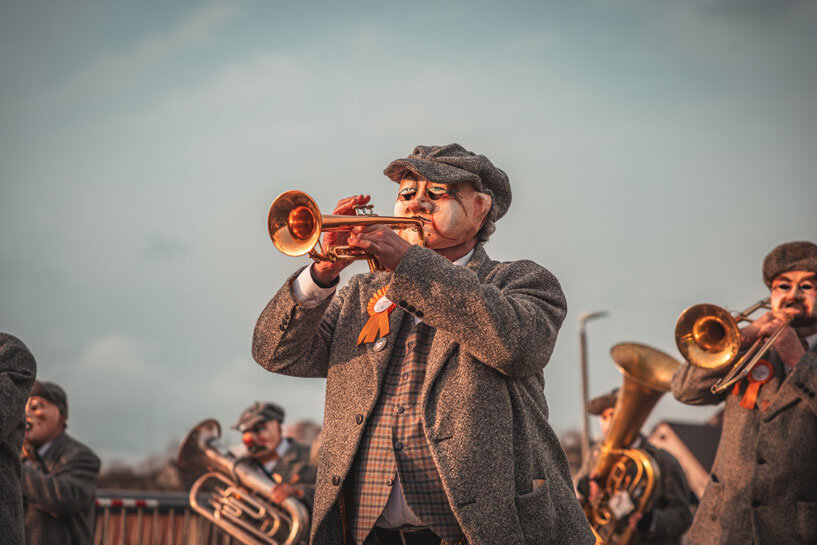
Tuesday evening is dominated by the Guggenmusik bands, which hold their concerts on the Marktplatz, Barfüsserplatz and Claraplatz between 7.30 and 11 pm. Thousands of fans are thrilled by the rousing arrangements. Beforehand, the Guggenmusik bands which are part of associations called FG and IG meet at Messeplatz and march from 6.30 pm via Clarastrasse over the Mittlere Brücke to Marktplatz or Barfüsserplatz. The non-organized Guggenmusik bands gather at Claraplatz at 8 pm and perform there.
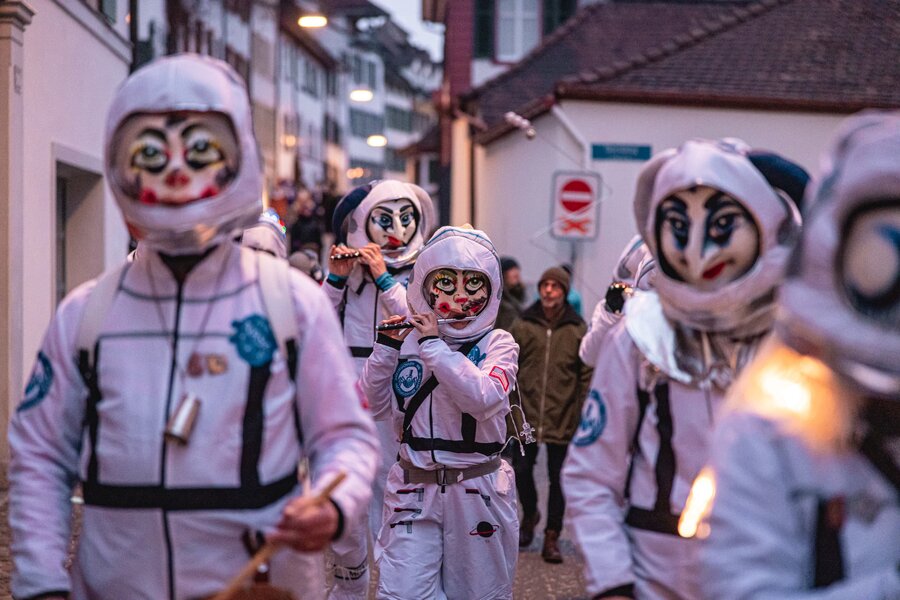
If you want to understand the soul of the Basel Carnival, you can't avoid the activity called "Gässle". On Tuesday afternoon and on all three days after dark, small and large groups of drummers and piccolo players, individual maskers and Guggenmusik bands parade through the alleyways of the old town. Nowhere do the piccolos sound brighter and the drums darker. You can follow every formation to the sound of traditional and new compositions. Or you can simply stand at the side of the street and let your eyes wander and your ears feast - a wonderful way to take part in this colorful event.
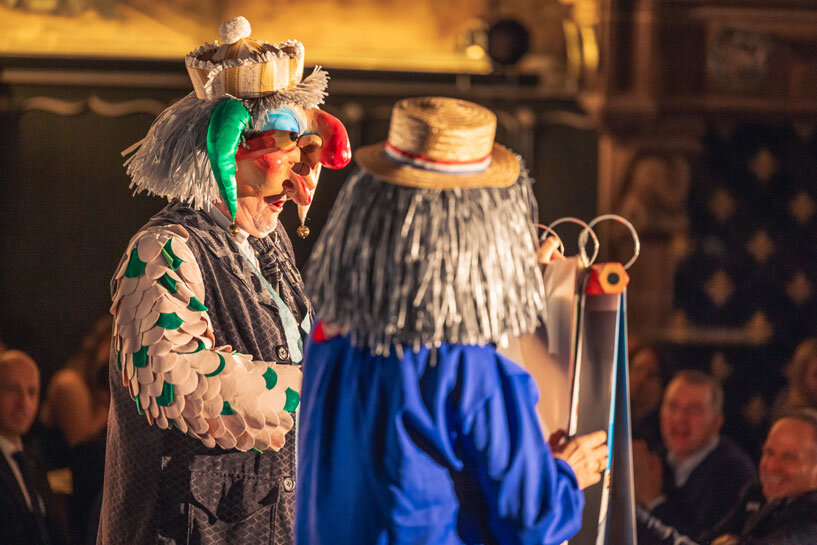
No wonder, the Schnitzelbänke are known far beyond the city limits, after all they embody the famous wit, mockery and bite of the Basel Carnival. Performed in groups, solo or in pairs, to various melodies and in verses written in the Basel dialect, they satirize and criticize the grievances and events of the past year. On Monday and Wednesday evenings they sing in pubs in the city center, on Tuesday evenings they can be found mainly in the clique cellars.
Schnitzelbank associations:
Bängg fir Basel, Basler Schnitzelbangg Gesellschaft, Bebbi Bängg, Comité 1914, Schnitzelbank, IG WUF (Wildundfrei), Verainigty Schnitzelbangg Gsellschaft 1906
The carnival is history, melancholy is spreading. But don't worry: there are still some carnival events to look forward to!

Bummel marks the end of the carnival year on the three Sundays following the carnival. It is customary to pay a visit to the region or a neighborhood in civilian dress, with or increasingly without an instrument. Between 4 and 11 pm, the active participants march through the old town drumming, playing piccolo and playing other instruments; most of them through the Freie Strasse towards Marktplatz and then through the other streets and alleyways.
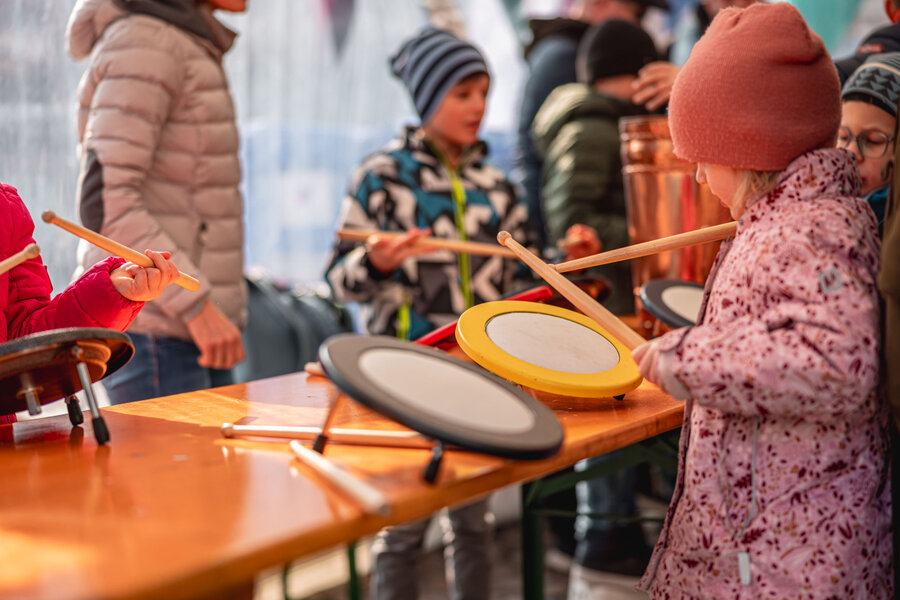
Carnival to get to know and try out: on Friday and Saturday after the Basel Carnival, children and young people can make their first sounds on the piccolo under expert guidance, drum on a Böggli (the practice device for drumming) and get a taste of the carnival atmosphere. The creative part of the carnival, crafting, painting and creating, is not neglected either. Active carnival enthusiasts from various groups will be on hand as supervisors to explain everything to children and parents and answer questions. The first lesson is open to everyone and is free of charge. Adults who would like to join in the carnival can also find out more.
We send you all the news about the Basel Carnival directly to your inbox.